
Feeling Lost? Understanding Existential Dread and How to Regain Your Purpose

Have you ever looked at the stars or been stuck in traffic in South Daytona and suddenly thought, "What’s the point?" or "Is any of this real?" If you have, you’ve felt existential dread.
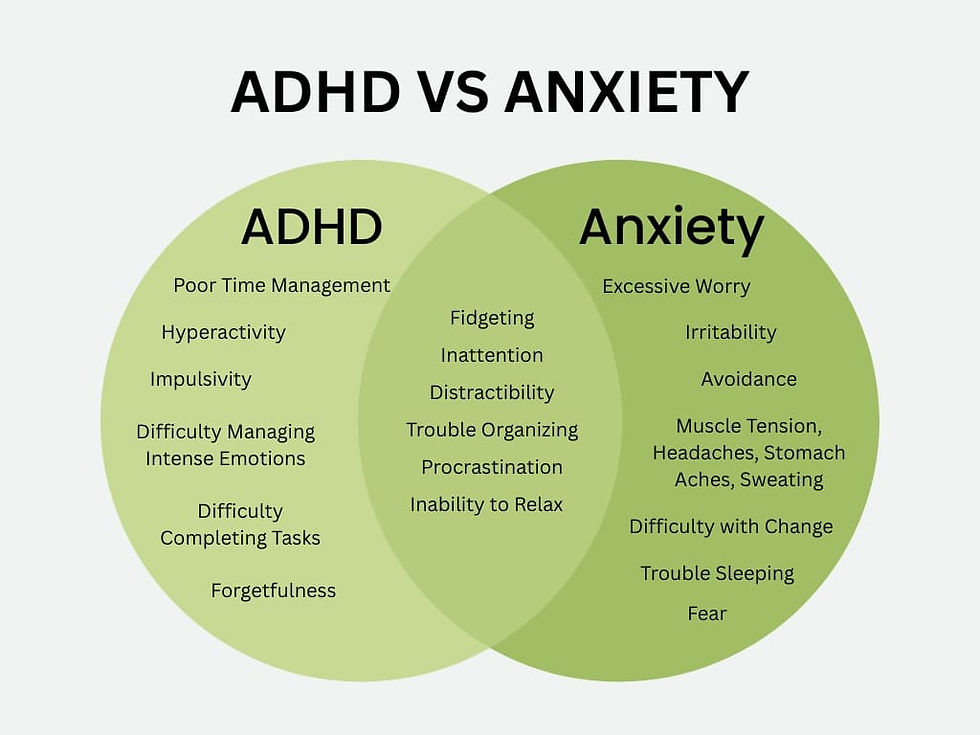
Most people sometimes wonder about the meaning of life, but for many of our patients in Volusia County, these thoughts can get stuck and make it hard to move forward. At BFF Clinic, we notice that existential dread often hides other issues like ADHD or Existential OCD.
Understanding why you feel that dread is the first step to feeling stable again.
What is Existential Dread?
Existential dread is a deep feeling of worry or fear about the big questions in life, such as death, freedom, being alone, and whether life has any meaning.
In a clinical setting, we distinguish between a "healthy" philosophical curiosity and a "disordered" dread. If your thoughts about the universe stop you from enjoying a day at New Smyrna Beach or make it hard to work in Deland, it might be a sign of clinical anxiety or OCD. Often, this "heavy" feeling can be mistaken for Morning Anxiety if the dread hits the moment you wake up.
The Hidden Links: ADHD and Existential OCD
At BFF Clinic, we often see that feeling of "dread" can be a sign of something more specific.
1. The ADHD "Existential Spiral"
Adults with ADHD often go through an "existential spiral." Since people with ADHD need things that interest them to stay focused, their brains are always looking for something stimulating. If they don't get enough stimulation, or if the future seems unclear because of "time blindness," their minds might start thinking deeply about questions like what their purpose is or what really matters. This inward-facing frustration is a quiet cousin to ADHD Rage, where the brain feels "trapped" by its own intensity.
2. Existential OCD (The "Philosophizing" Subtype)
If you keep having the same worries about life over and over, and can't stop them, you might have Existential OCD. This subtype involves:
Intrusive Thoughts: "What if no one else is real but me?"
Compulsive Checking: Spending hours looking through philosophy books, searching for an answer to feel better.
Derealization: Feeling like you are just watching yourself, as if your life is a movie, instead of actually living it.
How to Manage Existential Dread: 3 Strategies
When you start worrying about life's big questions, use these practical ideas to help you focus on the present moment.
1. Practice Radical Acceptance: Instead of trying to answer questions that have no clear answer, focus on accepting that some things are uncertain. In Exposure and Response Prevention (ERP), we encourage people to get comfortable with not knowing everything.
2. Focus on Values, Not Answers: You may never know the "meaning of life," but you know what you value—whether that's being a good parent, a creative artist, or a reliable neighbor in Deland.
3. Grounding Techniques: When the dread hits, use the "5-4-3-2-1" method. Name 5 things you see, 4 you can touch, 3 you hear, 2 you smell, and 1 you taste. This helps bring your focus back to the present moment.
When to See a Doctor
Thinking deeply is valuable, but it shouldn't hold you back. You should see a psychiatrist if:
Social Withdrawal: You are staying away from friends because "it all feels pointless."
Impaired Functioning: You can't finish tasks at work because you keep thinking about death.
Physical Distress: The dread causes panic attacks, chest tightness, or Somniphobia (fear of sleep) because you are afraid of the thoughts that come when it’s dark.
Depersonalization: You often feel like you are not connected to your body or what is happening around you.
At BFF Clinic, we help residents across Volusia County transition from "wondering if it matters" to "living like it matters." Contact us and schedule your consultation at BFF Clinic today, and let us help you find your ground in New Smyrna Beach, South Daytona, or Deland.
Conclusion
Feeling lost or worried about the meaning of life doesn't have to be normal for you. Whether it's because your ADHD makes you question things or because of OCD, there are ways to feel better. Getting help from mental health professionals, trying therapies like cognitive-behavioral therapy, and having supportive people around you can really help. Remember, many people have these thoughts, and with the right help and tools, you can find peace and purpose in your life.
FAQs
1. Is existential dread a mental illness?
No, existential dread is not a mental illness on its own. It is a normal human feeling. But if it lasts a long time and causes a lot of distress, it can be a sign of conditions like Generalized Anxiety Disorder (GAD), Depression, or Existential OCD.
2. Why does my ADHD make me think about death so much?
ADHD can cause "hyperfocus" on intense topics. If your surroundings are not interesting enough, your brain might start thinking about deep ideas like death to get the excitement and dopamine it needs.
3. Can medication help with existential dread?
Yes. If your dread comes from anxiety or an OCD cycle, medicine can help reduce the intrusive thoughts, making therapy more effective.
4. What is the difference between existential dread and a mid-life crisis?
A mid-life crisis usually happens because of outside changes, like your job or getting older. Existential dread is more about deep, inner questions—wondering about the meaning of life and reality, no matter how old you are or how successful you feel.
5. How long does existential dread last?
Without treatment, it can last for years in an "on-and-off" cycle. With the right therapeutic approach (like CBT or ACT), many people learn to manage these thoughts in a few months.


La ricerca indica che il quadro analitico applicato qui è solido e coerente. La catena logica rimane intatta senza salti infondati. Il sito web aiuta a inquadrare il problema nel suo dominio appropriato. La scalabilità comportamentale è rappresentata tramite interfacce di intrattenimento online.